Static or Dynamic QR Code: Which One Should You Use?
One is permanent and works offline. The other can be edited and counted. The right answer depends on one question about your printing.
The MyPersonalQR team1 min read · 16 September 2025 · Basics
Two weeks after the flyers arrive, the offer changes. You look at the little black and white square in the corner and realise it can't change with it.
Every QR code is one of two kinds, and you can't tell which by looking. Both are black and white squares, and neither looks special.
The difference is where the information lives, and that one detail decides what you can and can't do afterwards.
Ask whether you could reprint everything if it changed tomorrow.
The actual difference
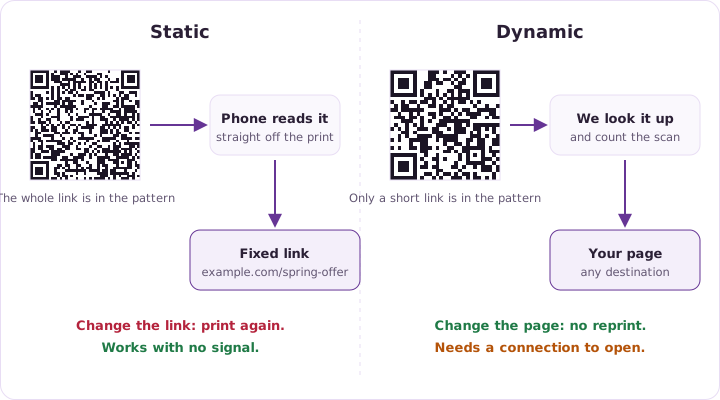
A static code carries your content inside the pattern. A dynamic code carries a short link, and we serve whatever you have pointed it at.
Static
The content is the pattern
- Works with no internet at all
- Nothing to keep running
- Nothing is recorded
- Fixed the moment it is printed
Dynamic
The pattern points at a link you control
- Change the destination any time
- Every scan is counted
- Rules for time, dates and passwords
- Needs a connection to open
The question that decides it
Ask yourself whether you could reprint everything if the information changed tomorrow.
If the answer is no, because it is on a thousand boxes or on a sign bolted to a wall, use dynamic. Being able to change it later is worth more than anything else on the list.
When static is the better choice
Static isn't the lesser option. It is the right one in a few specific situations, and dynamic can't cover them.
The clearest is Wi-Fi. Someone scanning a Wi-Fi code has no connection yet, which is exactly why they are scanning. A dynamic code would have nothing to open with.
- Guest Wi-Fi cards
- A contact code that must work with no signal
- Anywhere you would rather nothing was tracked
- Content that will genuinely never change
The mistake people regret
The common one is choosing static for a printed campaign because it seemed simpler, then needing to change the destination two weeks later.
At that point there is nothing to be done. The pattern holds the old address and the only fix is new printing. Almost nobody regrets it the other way round.
See how this applies to Dynamic QR Codes.
Try it on a code of your own. It takes a few minutes.